

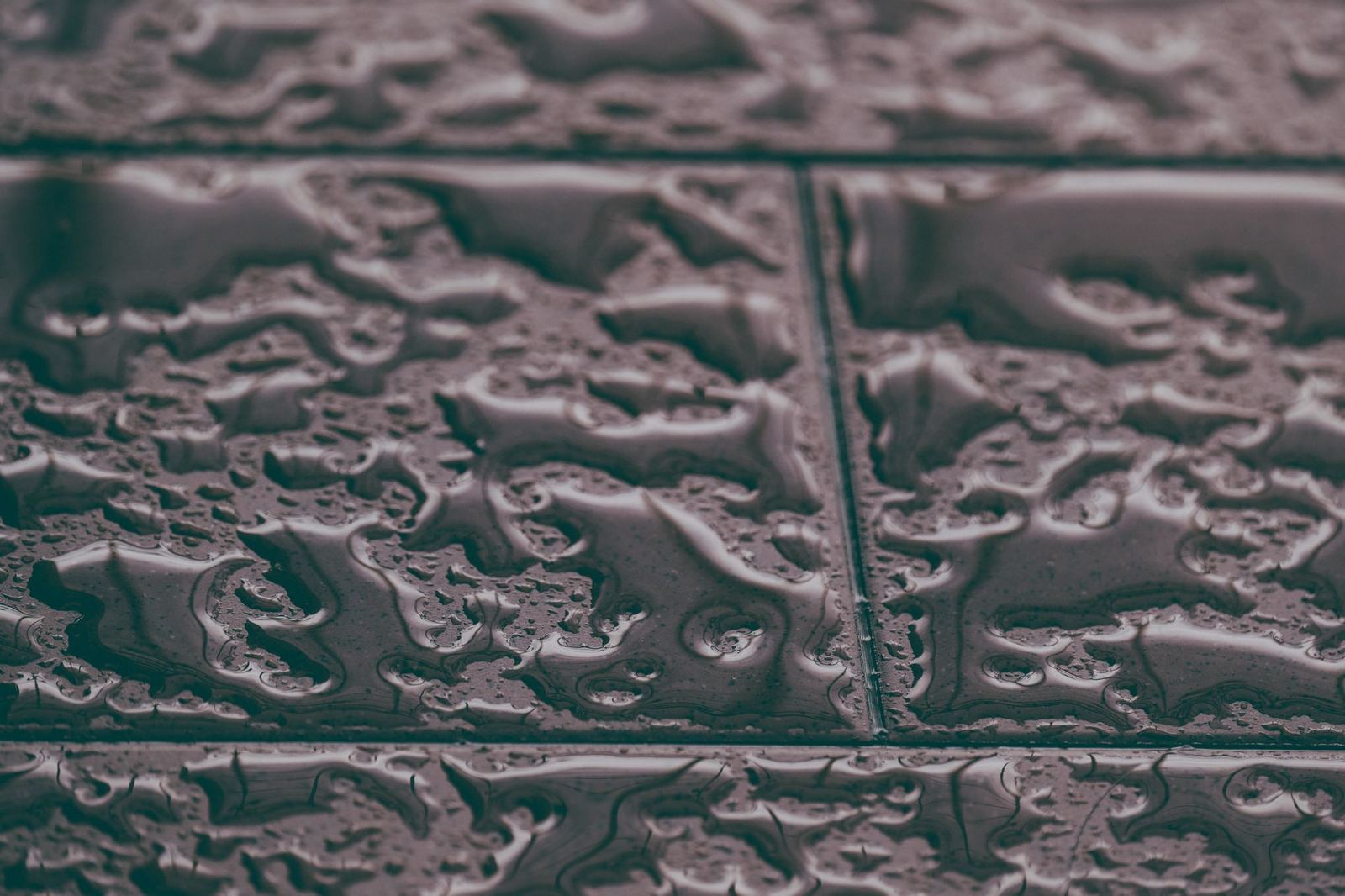
Choosing the right slip-resistance class for bathrooms, kitchens, outdoors and commercial areas is critical for safety.
When choosing a floor tile most people look at pattern and colour, yet the most important technical feature for safety is the slip-resistance class. Falling on a wet floor is one of the leading causes of household accidents. The R value makes that risk measurable.
How are R classes determined?
Slip resistance is measured with the German-origin DIN 51130 method (ramp test). A tester walks on an oiled floor in special shoes; the angle at which slipping begins decides the R class. R9 corresponds to roughly 6-10°, R10 to 10-19°, R11 to 19-27°, R12 to 27-35° and R13 to angles above 35°.
Which class for which space?
- R9: dry interiors, living rooms, bedrooms, offices
- R10: bathroom floors, kitchens, entrances and wettable interiors other than pool surrounds
- R11: outdoors, terraces, car-park entrances, commercial kitchen entrances
- R12-R13: industrial kitchens, oily floors, sloped ramps
Polished surfaces and slip resistance
Polished tiles are usually R9 and become slippery when wet. For bathroom floors choose a matt or textured surface. Textured surfaces raise slip resistance but may make cleaning harder, so a balance must be struck between R class and ease of cleaning.
Care and slip resistance
Slip resistance can decline over time because of cleaning products, limescale and soap film. Regular cleaning with a suitable detergent, use of a brush and an occasional descaler preserve the surface texture.
In Gilvan ranges
In all our floor ranges the R value is shown on the collection page and can be filtered. R10 ranges are suggested for bathrooms and R11 for outdoors. For commercial projects, contact our technical team for a space-specific slip-resistance measurement report.
When choosing a slip-resistance class, do not rely on the product label alone; consider who will walk on the space. For children, older people and users walking with wet feet, choosing one class higher is often a sensible safety margin. On the other hand, highly textured surfaces with very high R values can feel uncomfortable on bare feet and be harder to clean. The ideal is to choose the lowest adequate class for the conditions of use and preserve the surface with regular maintenance.
In addition, for commercial projects, requesting a written slip-resistance test report is important for both the business and insurance. These reports help to document the space's conformity to standards in case of an accident.
A practical note for designers: if different slip-resistance classes are used in the same space, transition lines and colour tones should be planned to give users a visual warning. For example, when R11 is used in the entrance hall and R9 inside, a small brass or aluminium profile at the transition gives both an aesthetic separation and a safe crossing.