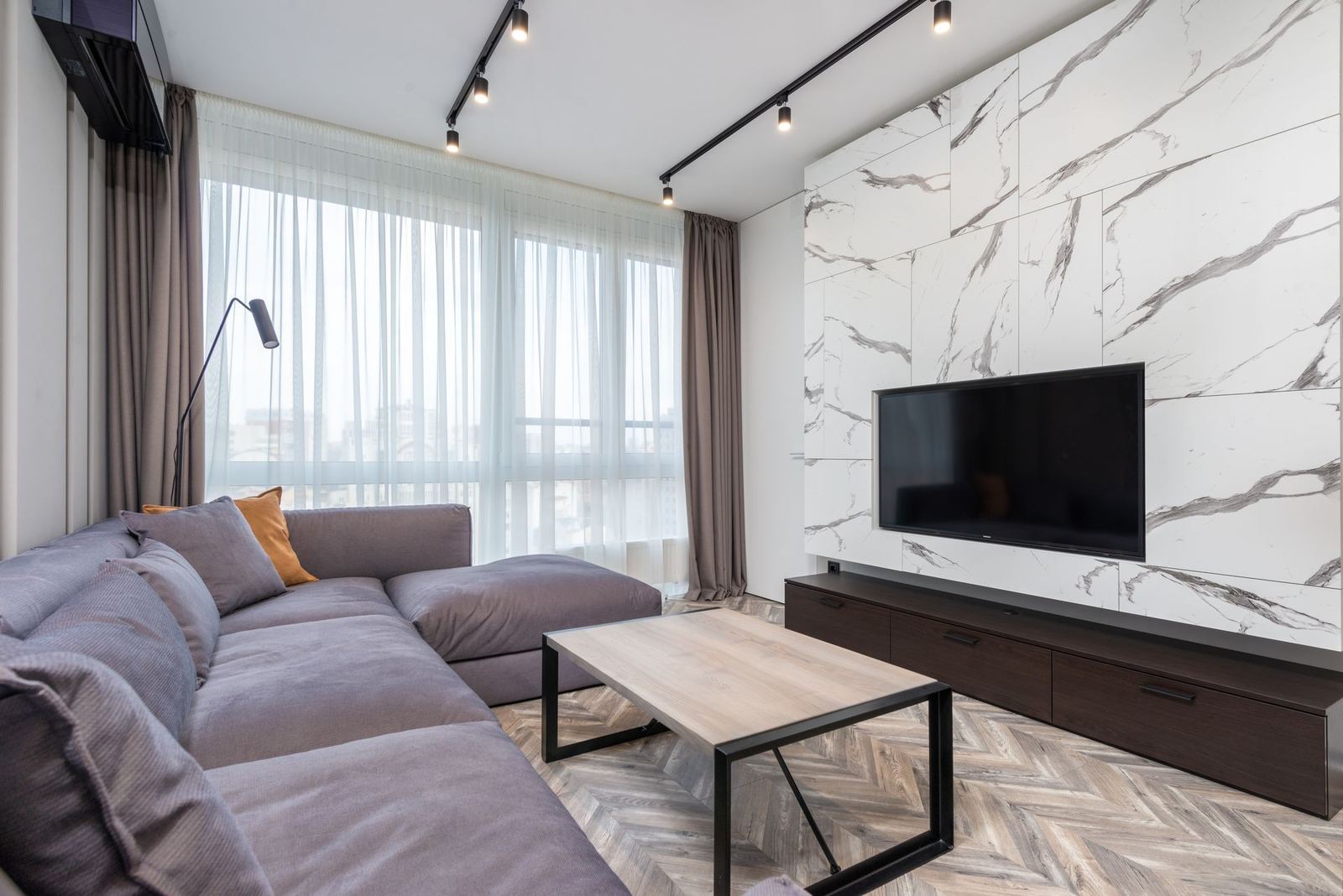

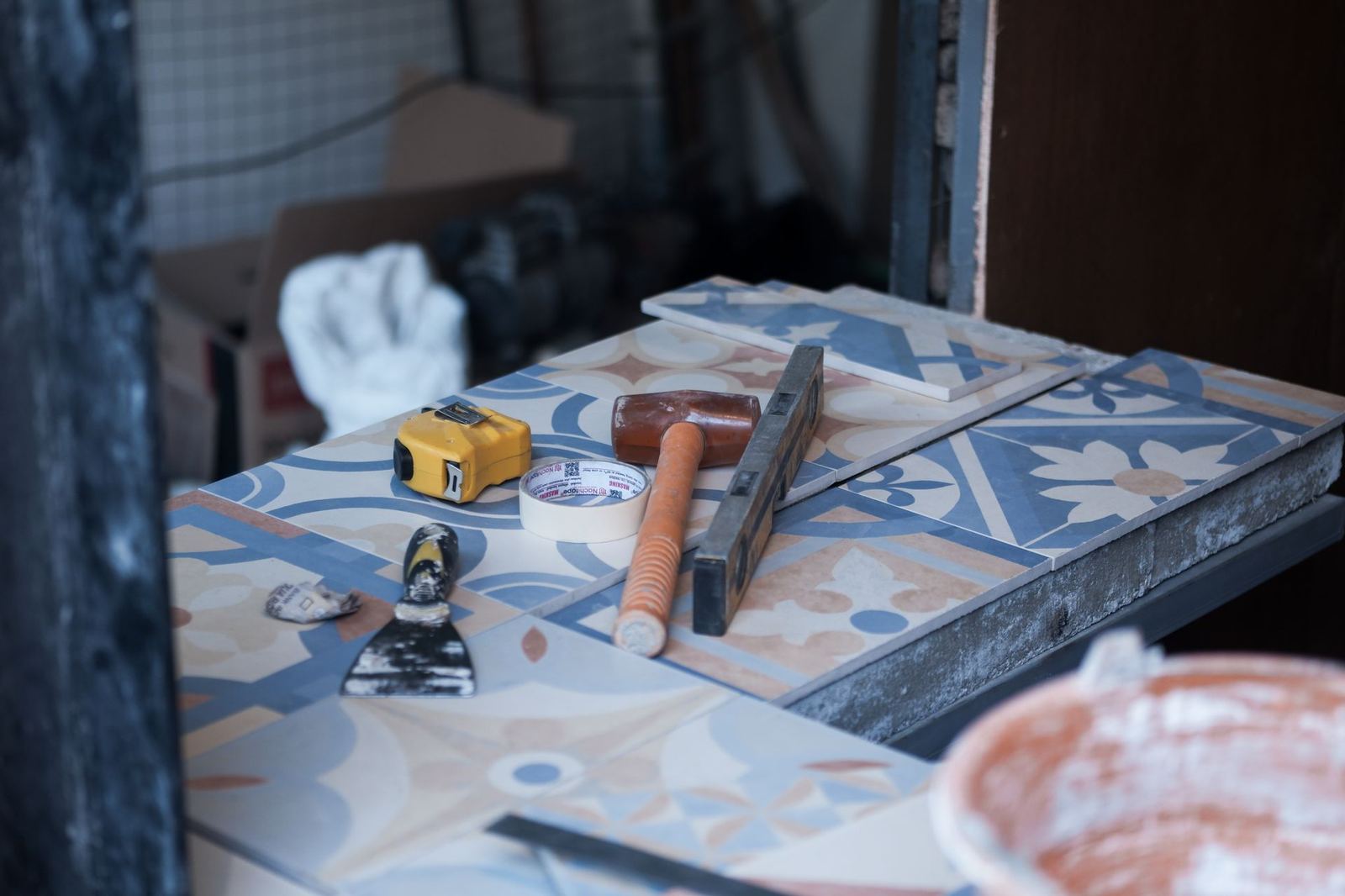
If you buy too little you risk shade differences; too much is wasted money. How to work out the box count correctly.
The most common mistake when buying tile is converting the room's m² directly into a number of boxes. In fact, cuts, pattern matching and breakages mean a waste allowance is always needed. If you buy too little it can be hard, even impossible, to find extra boxes from the same batch because colour tones vary slightly between batches.
Step 1: Work out the net area
Multiply the room's width and length and subtract untiled areas such as door openings, a kitchen island, bath and fitted cabinets. For example 4 m x 5 m = 20 m².
Step 2: Choose the waste allowance
- Straight lay: 5 percent
- Staggered lay, wood effect: 10 percent
- Diagonal and herringbone: 15 percent
- Complex room shape (many corners): +3-5 percent
For 20 m² with 10 percent waste: 20 x 1.10 = 22 m².
Step 3: Divide by the area per box
Area per box changes with tile size: for 60x120, 2 pieces and 1.44 m² per box; for 60x60, 4 pieces and 1.44 m²; for 80x80, 3 pieces and 1.92 m²; for 120x120, 2 pieces and 2.88 m². In the example, with 60x120, 22 / 1.44 = 15.28 boxes; rounding up, 16 boxes are bought (23.04 m², 32 pieces).
Step 4: Adhesive and grout
At average consumption, for 20 m² 5 kg/m² adhesive = 100 kg (four 25 kg bags); 0.5 kg/m² grout = 10 kg (two 5 kg packs). With large formats the adhesive quantity can rise because of double-buttering.
Step 5: A spare box
Reserving one extra box beyond the calculated number guarantees shade for replacing any tile that breaks or is damaged later. Although this is a small part of the total budget, it is often a lifesaver.
Practical tips
- Open all boxes and mix the tiles when laying; small shade differences are hidden
- Check that the batch (shade/calibre) numbers on the box labels are the same
- Learn the return terms; unopened boxes can be returned
- Use our calculator and have the result checked by our consultant
Another important point is patterned and directional tiles. With marble- or wood-effect tiles, laying in box sequence is needed to keep the pattern flow, which can raise waste. We suggest allowing 10-12 percent waste in such layouts. In areas that need many cuts, such as around a kitchen island or fireplace, waste can reach 15 percent.